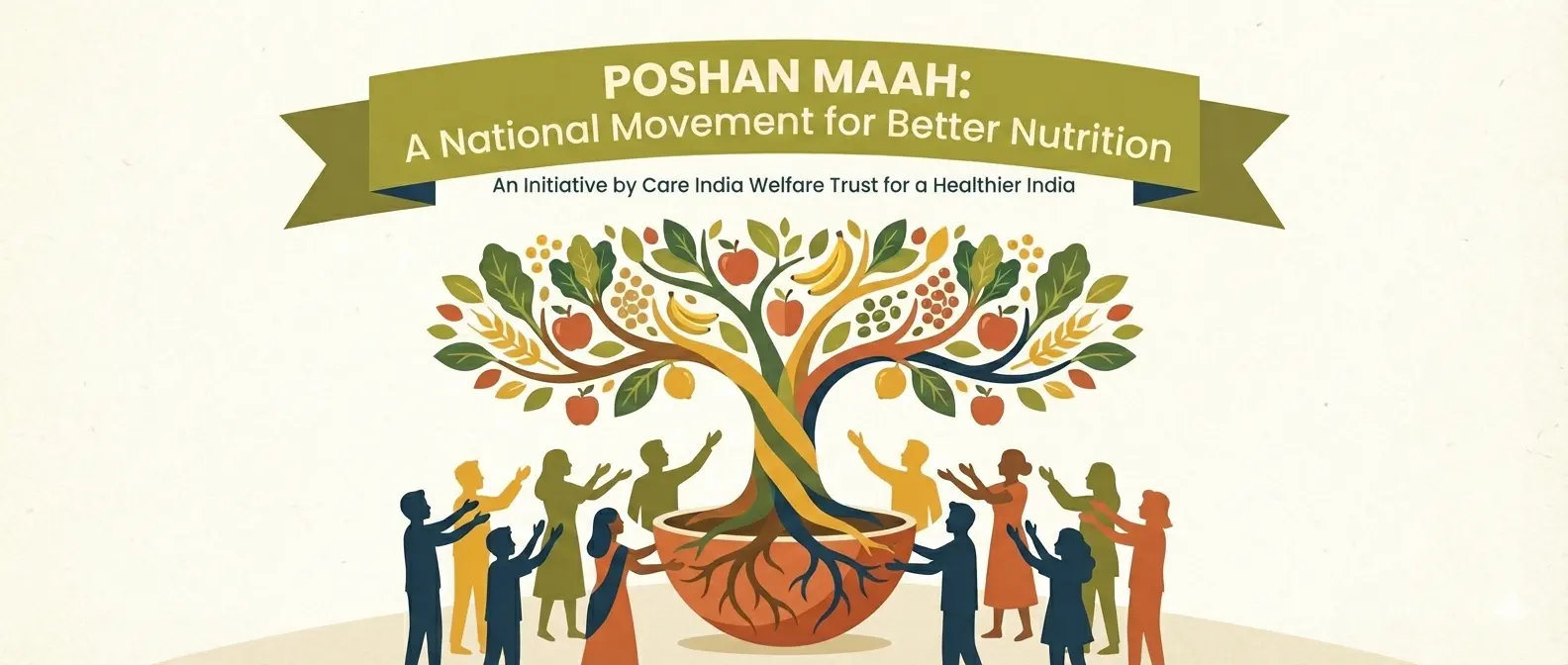
Poshan Maah: A National Movement for Better Nutrition
Nutrition is the backbone of a healthy society. A country can never develop unless its children are strong, its mothers are healthy, and its people are aware of the importance of a balanced diet and a clean lifestyle. In India, malnutrition has always been a concern that has affected millions of women and children, especially in rural areas. To combat this serious problem, the Government of India initiated a massive campaign called Poshan Maah, which has now become a massive national movement for better nutrition.
At Care India Welfare Trust, we understand that nutrition is not only about food but also about knowledge, accessibility, awareness, and empowerment. Through outreach programs, awareness activities, and grassroots work, our organisation is committed to the cause of creating a healthier, better-nourished India. This blog post will discuss the significance of improved nutrition, the national movement behind the campaign, and how non-profits, communities, and individuals can make a difference in creating a sustainable future.
Understanding the Importance of Nutrition in India
Malnutrition is one of the most pressing public health issues in India. Malnutrition affects children under the age of five, adolescent girls, pregnant women, and nursing mothers. Malnutrition causes stunted growth, wasting, anaemia, low immunity, and poor cognitive development. These problems lead to lower educational achievement, lower productivity, and economic losses for the country over time.
India has made tremendous progress in food production, but the availability of nutritious food is not equal for all. Poverty, lack of knowledge, food habits, sanitation, and access to healthcare are all factors that contribute to malnutrition and micronutrient deficiencies.
Nutrition is not just about consuming adequate food; it is about consuming the right food. A balanced diet consists of carbohydrates, proteins, healthy fats, vitamins, and minerals. When families understand the importance of eating diverse foods, clean drinking water, and proper sanitation, overall health outcomes improve dramatically.
A National Movement for Better Nutrition
The beginning of Poshan Maah has been a significant milestone in India's fight against malnutrition. The annual event takes place in September every year, and its emphasis is on creating awareness about healthy eating practices, breastfeeding, maternal health, anaemia control, and monitoring the growth of children.
The Government, through Poshan Maah, aims to bring together the ministries, state governments, Anganwadi workers, healthcare professionals, and civil society organisations. The aim is not only to provide food supplements but also to bring about a behavioural change in the community.
The important aims of the campaign are:
- To reduce stunting and wasting in children
- To prevent anaemia in women and children
- To promote exclusive breastfeeding for the first six months
- To encourage immunisation and health checks on time
- To create awareness about sanitation and clean drinking water
This movement is all about community engagement, ensuring that awareness is created even in the farthest corners of the villages. It aims to bring about a long-term change in society, rather than a short-term one.
The Role of NGOs in Improving Nutrition Awareness
Non-Governmental Organizations are important in filling the gap between policies and people. At Care India Welfare Trust, the Poshan Maah campaign becomes a chance to enhance outreach efforts and encourage people to participate at the grassroots level.
Our strategy involves:
- Organising nutrition awareness camps in rural areas
- Educating mothers on healthy eating habits using local ingredients
- Launching health check-up camps for children
- Disseminating awareness material in local languages
- Partnering with Anganwadi centres to hold community programs
We, at Care India Welfare Trust, are of the opinion that the key to long-term change is education. Mothers, once they are aware of the significance of iron, proteins, and cleanliness, can make their own decisions regarding their families’ health.
Maternal and Child Health: A Major Area of Emphasis
Maternal nutrition influences infant health. Malnourished women are more likely to have babies with low birth weight, who can suffer from health problems throughout their lives. This makes proper nutrition during pregnancy and breastfeeding essential.
Major Interventions for Maternal Health
- Promoting iron and folic acid supplements
- Encouraging women to have regular antenatal visits
- Raising awareness about institutional deliveries
- Supporting breastfeeding counselling sessions
- Providing information on post-delivery care
Child nutrition, especially in the first 1,000 days of life, influences future health and cognitive abilities. Malnutrition during early childhood can cause irreversible damage.
Key Steps for Child Nutrition
- Exclusively breastfeeding the child for six months
- Introducing complementary feeding on time
- Monitoring growth regularly
- Following the immunisation schedule
- Practising healthy food preparation habits
These carefully planned steps help children not only survive but also thrive.
Community Participation and Grassroots Movement
Community participation during the Poshan Maah is crucial for its success. Awareness campaigns are most successful when community leaders, teachers, healthcare professionals, and youth members come together to spread the message of nutrition.
Village-level activities may include:
- Nutrition rallies and awareness walks
- Healthy recipe competitions
- Growth monitoring camps
- Demonstrations on preparing low-cost, nutritious meals
- School-based nutrition education sessions
These activities help turn the awareness of nutrition from a government initiative to a people’s movement. When communities participate actively, they begin to own their health outcomes.
Anaemia and Micronutrient Deficiency
Anaemia is still prevalent in women and children in India. Iron deficiency causes weakness, fatigue, and complications during childbirth. To combat micronutrient deficiency, a multi-faceted approach involving diet, supplements, and awareness is necessary.
Iron-rich foods like green leafy vegetables, lentils, jaggery, and iron-fortified cereals must be encouraged. Vitamin C supplements enhance iron absorption, and education about deworming and proper sanitation practices minimises nutrient loss.
NGOs can spread these messages effectively through school and self-help group meetings. Health screening camps also assist in the early detection of vulnerable groups.
Leveraging Technology and Innovation
Technology is increasingly being used for the monitoring of nutrition indicators. Online monitoring of child growth statistics, mobile awareness campaigns, and webinars have increased the reach of nutrition initiatives.
Care India Welfare Trust uses technology in conjunction with ground-level activities to ensure better coordination and transparency. Social media campaigns, webinars, and community WhatsApp groups are effective in disseminating correct nutritional information efficiently and effectively.
Data-driven approaches enable stakeholders to track progress, point out deficiencies, and improve interventions. Technology used in conjunction with ground-level activities has greatly improved the impact.
Sustainable Nutrition Through Local Solutions
Achieving sustainable nutrition is essential for ensuring long-term nutritional security. Kitchen gardens, local food diversity, and seasonal foods can help cut down on the consumption of packaged foods.
Vegetable gardens in homes can not only improve nutrition but also cut down on expenditures. Community farming programs and self-help group programs can further help ensure food security at the local level.
Learning about local foods that are rich in nutrients can also help restore indigenous knowledge systems.
Challenges in Meeting Nutritional Objectives
Although there has been progress, the following are some challenges that still need to be overcome:
- Poverty and income disparities
- A lack of healthcare infrastructure in rural settings
- Misconceptions about food in culture
- Gender disparities in women's nutrition
- Insufficient sanitation facilities
To overcome these challenges, there must be a concerted effort on the part of the government, NGOs, the private sector, and society. Awareness needs to be converted into action.
Creating a Healthier Tomorrow Together
As we look back at Poshan Maah, it is evident that nutrition is a process that needs to be worked upon every day and every month. A healthier India needs educated citizens, empowered mothers, educated children, and an active community.
Care India Welfare Trust is committed to working towards initiatives that spread awareness, ensure easy access to healthy food, and empower people with knowledge. We want to be a part of a nation where no child suffers from malnutrition and no mother is at risk of health-related issues that can be prevented.
Nutrition is a collective responsibility. Families need to practice healthy eating habits, schools need to educate children on healthy practices, healthcare professionals need to check growth rates regularly, and communities need to promote healthy living practices.
Conclusion
Improved nutrition is the key to the development of a nation. When children are healthy, they perform better in school. When women are properly nourished, the rate of maternal mortality drops. When people know the importance of hygiene and nutrition, the prevalence of diseases drops.
The fight to eradicate malnutrition is not an easy one, but it needs to be fought. By supporting causes, volunteering in community programs, and creating awareness about healthy eating, each one of us can make a difference.
Care India Welfare Trust calls upon the community, partners, and volunteers to come together and make a difference in the lives of people by improving nutrition awareness and creating a healthier tomorrow.
Frequently Asked Questions (FAQs)
1. What is Poshan Maah?
Poshan Maah is a nutritional awareness campaign conducted every year in the month of September to spread awareness about healthy living among women and children in India.
2. Why is Poshan Maah significant for child development?
It aims to tackle malnutrition, stunting, wasting, and anaemia in children and ensure that children grow up healthily and soundly.
3. Who are the main beneficiaries of Poshan Maah?
The main beneficiaries of Poshan Maah are pregnant women, lactating mothers, children below five years of age, and adolescent girls.
4. How does Care India Welfare Trust help in Poshan Maah?
The trust organises awareness camps, health checks, nutrition education, and community outreach programs to help children and women eat healthy.
5. How can one contribute to Poshan Maah initiatives?
People can contribute to Poshan Maah initiatives by participating in awareness campaigns, spreading the message of healthy eating, cooperating with local Anganwadi centres, and spreading awareness about healthy eating habits and personal hygiene.